


Self-Advocacy is speaking up and speaking out for yourself and sometimes for others who can’t or won’t speak up for themselves. This includes what you want and don’t want; what you need and don’t need; and hopes, dreams and goals for your life.
A Self-Advocate is a person who speaks up for themselves.
The Illinois Self-Advocacy Alliance (The Alliance) was a statewide network of self-advocates, advocacy groups and allies in Illinois. It was funded by the Illinois Council on Developmental Disabilities from 2008 – 2024.
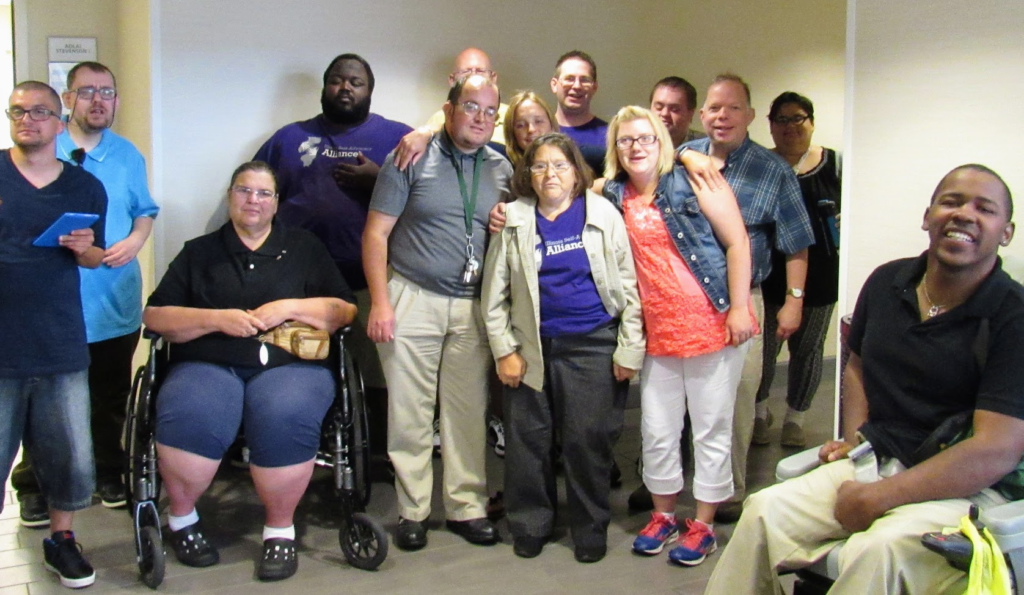
The Alliance was created in 2008 by a group of Illinois self-advocates. This group was part of a 2006 project funded by the Illinois Council on Developmental Disabilities to strengthen the self-advocacy movement in Illinois. During the project, this group spoke to over 800 self-advocates from across the state and learned a lot about what self-advocates want to make like better. Then, they presented what they learned to self-advocacy groups throughout the states. During this process, they realized that the best way to strengthen the self-advocacy movement in Illinois is to form a network of self-advocacy groups. The groups would speak with one voice and work together to make change. The group names itself The Illinois Self-Advocacy Alliance, or “The Alliance.”
The mission of The Alliance was to speak up for ourselves and each other while working together to make changes in our communities and in Illinois. The vision of The Alliance was self-advocates working together to get the support they need and to live the life they want in the community.
The Alliance focused on empowering people to speak up and speak out about what they want/need, don’t want/don’t need, action plan their goals and participate in advocacy at the personal, community and statewide levels. Empowering people was done through education, training and individualized mentoring.
Check out The Alliance’s YouTube Channel. With more that 150 recorded presentation, we are sure you’ll find something of interest!
The Alliance created many resources related to self-advocacy over the years. Check them out below.
Resources for Self-Advocacy Groups
Whether you are starting a self-advocacy group or looking to enhance your current self-advocacy group, check out the Alliance Self-Advocacy Leadership Manual.
Robert’s Rules of Order is a standard set of rules to run orderly meetings with maximum fairness to all members. Check out an easier to understand version at Robert’s Rules of Order.
The Culture of Self-Advocacy: An Environmental Checklist can be used individually, as a self-advocacy group to find out any gaps in self-advocate empowerment and involvement, and make a plan of improvement. Areas on the checklist include Learning Opportunities; Support Staff; and Supporting Personal Power.
Have an issue/concern you want to change? Check out Got Time – Advocating for An Issue or Concern for ideas of what you and your self-advocacy group can do to share your message and make changes!
Self-Advocacy Groups Taking Care of Business is a resource to help advisors and allies prepare for online self-advocacy meetings. Whether you are planning for your 1st online self-advocacy meeting or your 31st, we hope you discover something to take your self-advocacy meetings to the next level!
Rights
Do you receive Medicaid Home and Community-Based Services through a Developmental Disability Waiver? Learn about your rights! Check out the accessible versions of the Illinois Department of Human Services’ Rights of Individuals – Medicaid Home and Community-Based Services Developmental Disability Waivers:
Legislative Advocacy
The Alliance, in partnership with the Illinois Council on Developmental Disabilities, created several resources about legislative advocacy of filing Witness Slips. The resources include:
- Speaking Up and Speaking Out by Filing a Witness Slip recorded presentation
- Speaking Up and Speaking Out by Filing a Witness Slip PowerPoint
- Advocacy Through Witness Slips – Picture Resource
- Advocacy Through Witness Slips – Written Resource
Supported Decision-Making
“Everyone has the right to make decisions about their own lives.”
Supported Decision-Making is a way for a person with a disability (PWD) to get the help they need with thinking about options, making choices, and letting others know what decisions they made. Click here to see the Supported Decision-Making Fact Sheet.
Healthy Relationships and Sexuality
The Alliance was part of the Illinois Department of Human Services’ Division of Developmental Disabilities Sex Education Implementation Oversight Committee as well as subcommittees. In addition, self-advocates and The Alliance have participated in the following:
- Self-advocates advocated for sex education and wanted to play a role in how this was provided to them.
- Self-advocates through The Alliance testified in stakeholder meetings, submitted witness slips and testified before the legislature.
- Self-advocates and The Alliance have been active members of the Sex Ed Workgroup and the work of its subcommittees.
- The Alliance conducted focus groups to make sure the voices of self-advocates were central to the implementation of the new law.
Check out the resources developed by The Alliance
Resources
Frequently Asked Questions about Sex Education and the Sex Education Bill
HB3299 – What Self-Advocates Want You to Know:
Easier to Understand Sexual Rights Statement:
Check out more resources below!
Advocacy/Self-Advocacy
- ASAN (Autistic Self Advocacy Network)
- Find My Elected Officials
- I Can Be Safe Online
- Illinois Assistive Technology Program
- Illinois Guardianship and Advocacy Commission – Guardianship
- Illinois Guardianship and Advocacy Commission – Supported Decision-Making
- SABE (Self-Advocates Becoming Empowered)
- People First
- SABE (Self-Advocates Becoming Empowered) GoVoter Project
- SARTAC (Self Advocacy Resource and Technical Assistance Center)
- Self-Advocacy Online
Rights/Rules/Regulations
- Adult Protective Services (Illinois)
- Equip for Equality (Illinois)
- Illinois Administrative Code 59, Part 115 – Standards and Licensure Requirements for Community-Integrated Living Arrangements (CILA)
- Illinois Administrative Code 59, Part 119 – Minimum Standards for Certification of Developmental Training Programs
- Illinois Administrative Code 77, Part 350 – Intermediate Care for the Developmentally Disabled (ICF/DD) Facilities Code
- Illinois Human Rights Authority
- Illinois Human Rights Authority – Complaint Form
- Office of the Inspector General (Illinois)
- OIG (Office of Inspector General) Rule 50 – Investigations of Alleged Abuse, Neglect, or Financial Exploitation in State-Operated Facilities and Community Agencies
- Who Do You Call? – Reporting Abuse, Neglect and Financial Exploitation (Illinois)
Disability Services Websites
- Illinois Council on Developmental Disabilities
- Illinois Department of Human Services
- Illinois Department of Human Services Division of Developmental Disabilities
- Illinois Department of Human Services Division of Behavioral Health & Recovery
- Illinois Department of Human Services Division of Rehabilitation Services
- Illinois Network of Centers for Independent Living
- National Council on Independent Living